Introduction: The Catalyst and the Horizon
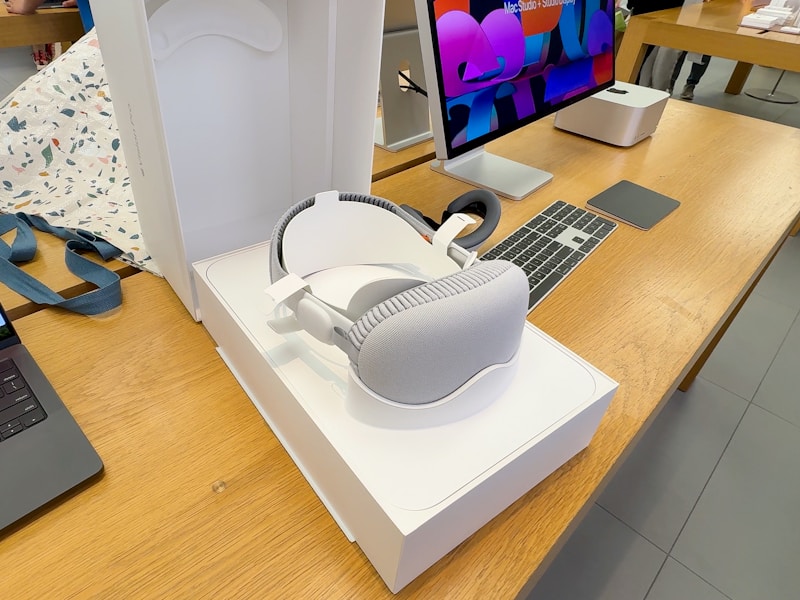
The launch of the Apple Vision Pro was a watershed moment for immersive technology. By branding its headset as a “spatial computer” rather than a Virtual Reality (VR) or Augmented Reality (AR) device, Apple successfully reframed the conversation. However, focusing solely on one luxury headset misses the forest for the trees. Spatial computing is not a single product; it is an paradigm shift in how humans interact with digital information, merging the physical and digital worlds into a seamless, interactive canvas.
Beyond the walled garden of Apple’s ecosystem, a massive, decentralized revolution is taking place. From open-source software initiatives and lightweight AR glasses to enterprise digital twins and industrial applications, the future of spatial computing is diverse, collaborative, and rapidly evolving. This comprehensive guide explores what lies beyond the Apple Vision Pro and how the broader immersive tech landscape is set to transform our daily lives, work, and industries.
Understanding Spatial Computing: Moving Beyond Screens
To understand where the industry is going, we must first define what spatial computing actually is. Unlike traditional computing, which confines digital interactions to flat screens (monitors, smartphones, TVs), spatial computing uses the physical space around us as the user interface. It relies on a complex stack of technologies to operate smoothly:
- Simultaneous Localization and Mapping (SLAM): Algorithms that allow a device to understand its position within an environment while mapping that environment in real-time.
- Eye and Hand Tracking: Advanced sensors and cameras that eliminate the need for physical controllers, turning natural gestures and gaze into input commands.
- Spatial Audio: Dynamic audio rendering that mimics how sound behaves in the real world, providing crucial physical cues that anchor digital objects in space.
- Sensor Fusion: The integration of data from LiDAR, depth sensors, IMUs (Inertial Measurement Units), and RGB cameras to create a highly accurate digital reconstruction of the physical environment.
“Spatial computing is the ultimate convergence of physical and digital realities. It is the realization of the ambient internet, where information is no longer something we look at, but something we live within.”
The Hardware Contenders: Who Is Shaping the Post-Vision Pro Era?
While Apple has captured the premium consumer market, other hardware manufacturers are targeting different verticals, price points, and form factors to democratize spatial computing.
1. Meta and the Horizon OS Ecosystem
Meta remains the volume leader in XR. With the Quest 3, Meta demonstrated that high-quality mixed reality is possible at a consumer-friendly price point. More importantly, Meta’s strategic pivot to open up its operating system, renamed Meta Horizon OS, to third-party hardware manufacturers like ASUS ROG and Lenovo mimics Microsoft’s successful Windows model. This open-ecosystem play could build a massive, diversified hardware base that challenges Apple’s closed-ecosystem approach.
2. Enterprise Titans: Varjo and Magic Leap
For high-end industrial and medical applications, consumer devices fall short. Finnish hardware maker Varjo produces headsets with human-eye resolution, gaze-directed transport simulations, and advanced hand-tracking designed specifically for training pilots, surgical teams, and automotive designers. Meanwhile, Magic Leap 2 has carved out a niche in enterprise AR, offering an incredibly wide field of view and advanced dynamic dimming technology that allows digital overlays to remain visible even in bright, outdoor industrial environments.

3. Lightweight AR Glasses: The Holy Grail of Daily Wear
The ultimate goal for many in the industry is to replace the smartphone with a pair of stylish, lightweight prescription-compatible AR glasses. Companies like XREAL, Rokid, and Vuzix are making significant strides with waveguide technology, projecting crisp digital displays directly onto glass lenses. While currently acting mostly as secondary displays for smartphones or consoles, the rapid miniaturization of micro-LED displays and battery tech suggests true standalone AR glasses are closer than we think.
The Software Foundation: Open Standards vs. Walled Gardens
For spatial computing to reach its full potential, developers cannot be locked into proprietary platforms. The battle between open standards and closed ecosystems will dictate how seamlessly we transition between digital environments.
The OpenXR standard, led by the Khronos Group, is a cross-platform standard that eliminates the need to rewrite code for different VR/AR hardware. Major players, including Meta, HTC, Microsoft, and Sony, support OpenXR, ensuring a unified foundation for developers. Additionally, the development of the WebXR Device API enables developers to create spatial experiences that run directly within web browsers, bypassing app store fees and installation friction entirely.
Industrial, Enterprise, and Healthcare Applications
While gaming and entertainment draw the most media attention, the real economic engine of spatial computing is found in enterprise and industrial sectors.
1. Healthcare and Precision Medicine
Surgeons are already using spatial computing to overlay 3D holographic reconstructions of a patient’s internal anatomy directly onto their body during pre-op planning and active surgery. This minimizes invasive exploratory incisions and drastically improves surgical accuracy.

2. Industrial Digital Twins and Remote Collaboration
In manufacturing and heavy industry, spatial computing allows technicians to view digital twins—real-time, interactive 3D digital replicas of physical machinery. When a machine breaks down, a remote expert thousands of miles away can step into the technician’s spatial field of view, drawing annotations and overlaying step-by-step schematics directly onto the physical hardware.
Technical Hurdles: What Stands Between Us and Ubiquity?
Despite the excitement, several foundational challenges must be resolved before spatial computing achieves mass adoption:
- Optics and the Vergence-Accommodation Conflict: Current displays trick our eyes into seeing depth, which can cause eye strain and nausea over prolonged periods. True holographic or light-field displays are needed to solve this natural biological conflict.
- Battery and Thermal Management: Processing high-fidelity 3D environments in real-time requires immense computational power. Balancing processing power, battery life, and heat dissipation in a lightweight, comfortable headset remains an engineering bottleneck.
- Privacy and Biometric Security: Spatial devices collect unprecedented amounts of personal data, including eye-tracking movements (which can reveal emotions and interests), spatial maps of our private homes, and biometric gait analysis. Securing this data is paramount.
The Role of Generative AI in Spatial Worlds
Generative AI and spatial computing are deeply symbiotic. Creating 3D virtual environments and assets historically required weeks of specialized labor. Now, multimodal generative AI models can generate fully textured, interactive 3D models from simple text or voice prompts in seconds.
Furthermore, on-device AI acts as an intelligent co-pilot, interpreting the user’s physical environment, understanding context, and presenting relevant spatial information before the user even explicitly asks for it.
Strategic Advice: How to Prepare for the Spatial Shift
Whether you are a business owner, developer, or tech enthusiast, now is the time to prepare for this shift:
- For Businesses: Begin exploring how spatial training modules or interactive 3D product visualizers can reduce operational costs and boost customer engagement.
- For Developers: Invest time in learning open-platform standards like OpenXR, Unity, Unreal Engine, and WebXR. Focus on responsive, spatial UI design principles.
- For Consumers: Prioritize hardware that supports open standards and robust data privacy policies. Understand how your spatial data is stored and utilized.
Conclusion: The Dawn of a Seamless Digital Reality
The Apple Vision Pro successfully captured the world’s imagination, but it is merely the opening chapter of a much larger narrative. The true power of spatial computing lies in its democratization. As hardware becomes lighter and more affordable, open software standards solidify, and artificial intelligence accelerates content creation, spatial computing will transcend niche gadgetry. It will become the invisible, intuitive, and indispensable fabric that connects our physical world with the boundless possibilities of the digital realm.