The Broken Paradigm: The Centralized State of Web2 Identity
In our current digital ecosystem, we live under a system of digital feudalism. Every click, transaction, and registration leaves a trace controlled by massive tech conglomerates. These centralized entities act as identity brokers, harvesting our personal data, tracking our online behaviors, and monetizing our digital footprints. When we choose to “Sign in with Google” or “Log in with Facebook,” we aren’t simplifying our lives; we are handing over the keys to our digital sovereignty.
Under the legacy Web2 system, you are not the customer; you are the product. Centralized identity databases create massive target honeypots for hackers, resulting in catastrophic data breaches that expose billions of sensitive records annually.
The solution requires a fundamental shift in how digital identity is designed. Enter the Web3 era and the rise of Decentralized Identity (DID)—a paradigm shift that returns ownership, control, and privacy of identity back to the individual.
What is Decentralized Identity (DID)?
Decentralized Identity, often referred to as Self-Sovereign Identity (SSI), is a framework that allows individuals to generate, own, and manage their digital identities without relying on any centralized authority, registry, or middleman. It is built on trust, cryptography, and distributed ledger technology (DLT).
Instead of relying on a corporation to vouch for who you are, decentralized identity relies on cryptographic proofs. The core components of this ecosystem include:
1. Decentralized Identifiers (DIDs)
DIDs are a new type of globally unique identifier standardized by the World Wide Web Consortium (W3C). Unlike traditional usernames or email addresses, a DID is not owned by any company. It is a string of characters associated with cryptographic keys pointing to a decentralized ledger (like a blockchain), enabling secure, passwordless authentication.
2. Verifiable Credentials (VCs)
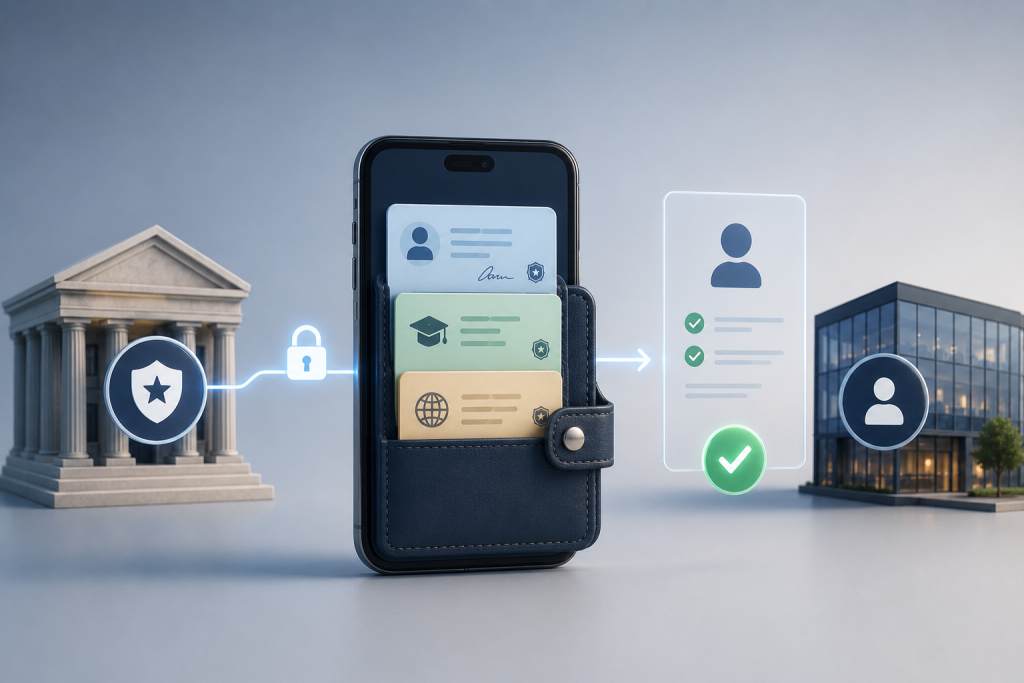
Verifiable Credentials are the digital equivalent of physical documents like your driver’s license, passport, or university degree. They are cryptographically signed by an authority (the Issuer) and stored securely in the user’s digital wallet. When you need to prove your age or qualifications, you can share these credentials directly with a third party without revealing unnecessary personal details.
3. Zero-Knowledge Proofs (ZKPs)
ZKPs are a mathematical breakthrough critical to Web3 privacy. They allow you to prove that a statement is true without revealing the underlying information. For instance, you can cryptographically prove that you are over 21 years old to an online service without revealing your actual date of birth or name.
The Trust Triangle: How DID Works in Practice
To understand how decentralized identity operates, we must examine the Trust Triangle. This framework consists of three primary actors interacting securely through cryptographic protocols:
- The Issuer: An institution (such as a university, government agency, or bank) that asserts a claim about a user, signs it with their private key, and issues it as a Verifiable Credential.
- The Holder (You): The user who receives the credential and stores it in a secure, decentralized digital identity wallet. The holder maintains complete control over who gets to see this data.
- The Verifier: An entity (such as an employer, landlord, or online platform) that needs to check the validity of a user’s credential. The verifier checks the blockchain to confirm the issuer’s public key is valid, verifying the claim instantaneously without needing to contact the issuer directly.
Why Decentralized Identity Matters: The Key Benefits
The transition from centralized silos to decentralized frameworks brings unprecedented benefits across multiple domains:
- Unmatched Data Sovereignty: You decide what data to share, with whom, and for how long. You can revoke access to your data at any time.
- Elimination of Data Honeypots: Because personal data is stored locally on users’ devices rather than central servers, hackers no longer have massive, centralized databases to target.
- Seamless Interoperability: A single decentralized wallet can be used across thousands of platforms, removing the need for hundreds of distinct passwords and accounts.
- Enhanced Trust & Reduced Fraud: Cryptographic signatures make it nearly impossible to forge credentials, streamlining compliance and verification procedures globally.
Real-World Use Cases of Decentralized Identity
Decentralized identity is not a theoretical concept; it is actively being deployed to solve critical challenges across various industries today:
Financial Services and DeFi
Traditional Know-Your-Customer (KYC) processes are repetitive and insecure, requiring users to upload passports and utility bills repeatedly. With DIDs, users can complete KYC once with an authorized entity and use a reusable, privacy-preserving credential to access Decentralized Finance (DeFi) platforms, ensuring compliance without sacrificing privacy.

Healthcare and Medical Records
Patients often struggle to access and share their medical histories across different healthcare systems. Under a DID model, medical records are stored as Verifiable Credentials owned by the patient. They can grant temporary, encrypted access to a specialist or emergency responder instantly, ensuring seamless and secure care coordination.
Education and Professional Credentialing
Universities are beginning to issue diplomas as cryptographically verifiable digital credentials. Graduates can instantly share these credentials with recruiters via their digital identity wallets, eliminating the administrative overhead, delays, and verification fees historically associated with background checks.
The Roadblocks to Mass Adoption
Despite the revolutionary potential of DID, a few hurdles remain before we see widespread global adoption:
- User Experience (UX) Complexity: Managing cryptographic keys and understanding digital wallets can be daunting for the average internet user. The industry must design intuitive, user-friendly interfaces to bridge this gap.
- Key Recovery Mechanisms: In a truly decentralized system, there is no “forgot password” button. If a user loses their private keys, they risk losing access to their identity. Innovative solutions like social recovery and multi-party computation (MPC) are being developed to mitigate this risk.
- Regulatory Integration: Regulators globally are still adapting to the decentralized paradigm. Establishing harmonized legal frameworks that recognize decentralized credentials is vital for scaling these solutions.
How to Take Control of Your Digital Footprint Today
The shift to Web3 is happening gradually, but you don’t have to wait to start taking control of your digital footprint. Here are actionable steps you can take today:
- Educate Yourself on Web3 Wallets: Download and explore non-custodial identity wallets that support DIDs and Verifiable Credentials.
- Transition to Privacy-First Services: Minimize your use of single sign-on (SSO) options from legacy tech giants. Choose end-to-end encrypted email and messaging platforms that prioritize data ownership.
- Advocate for Data Privacy: Support organizations, protocols, and products that build open-source, decentralized standards designed to put individuals in control of their own data.
Conclusion: Embracing Our Digital Future
Decentralized Identity represents a fundamental re-engineering of the internet’s social contract. By moving away from centralized gatekeepers, we can build a more secure, private, and equitable digital world. Reclaiming your digital footprint in the Web3 era is not just about adopting new technology—it is about demanding and securing your fundamental right to digital self-sovereignty.