
The Paradigm Shift in Artificial Intelligence
For the past decade, the trajectory of artificial intelligence has been undeniably cloud-centric. Massive data centers filled with high-performance GPUs processed everything from voice commands to medical images. However, this centralized approach has hit a critical bottleneck defined by latency, bandwidth constraints, and, most importantly, severe privacy concerns. Enter Edge AI: a paradigm shift that brings machine learning algorithms directly onto local hardware, such as smartphones, IoT devices, and smart gateways.
By processing sensitive data at the edge—where the data is actually generated—organizations and consumers can leverage the cognitive power of AI without exposing their private information to the risks of cloud transit and remote storage.
Why Privacy Demands Edge Computation
In a cloud-based AI ecosystem, every interaction requires sending raw data over the internet. Whether it is a home security camera feed, financial transactions, or confidential healthcare records, this transit creates multiple vulnerabilities:
- Data in Transit Vulnerabilities: Even with robust encryption, data flowing across public networks remains a target for interception and man-in-the-middle attacks.
- Third-Party Cloud Risks: Storing information on remote servers exposes data to potential data breaches, unauthorized government access, and changing privacy policies of cloud vendors.
- Regulatory Non-Compliance: Stringent frameworks like GDPR, CCPA, and HIPAA demand strict control over personal data. Keeping data localized inherently simplifies compliance.
“Edge AI eliminates the trade-off between technological utility and personal privacy. By keeping data local, we secure the individual’s digital footprint at the source.”
How Edge AI Achieves Ultimate Privacy
Edge AI operates on a simple yet powerful premise: keep the raw data local, and only share metadata or high-level insights when absolutely necessary. This is achieved through several technological advancements:

1. Model Quantization and Optimization
Historically, deep learning models were too large to run on consumer hardware. Modern techniques like quantization compress these neural networks—reducing 32-bit floating-point weights to 8-bit integers—allowing complex models to run efficiently on low-power, on-device Neural Processing Units (NPUs) without significant losses in accuracy.
2. Local Inference
When you speak to a smart assistant powered by Edge AI, the voice recognition and natural language processing occur directly on your device. The raw audio recording never leaves your home; only the processed command is executed, ensuring that intimate conversation details are never archived on external servers.
3. Federated Learning
When models do need to improve over time, Edge AI utilizes Federated Learning. Instead of sending user data to a central server to train a model, the model is sent to the local devices. The devices train the model locally using the user’s data, and then send only the updated model parameters (not the raw data) back to the cloud, where they are aggregated.
Real-World Applications of Privacy-First Edge AI
The applications of local AI processing span multiple highly sensitive sectors:
- Healthcare & Medical Devices: Wearable health monitors can analyze ECG patterns locally to detect anomalies in real-time, notifying doctors without uploading continuous biometric streams to the cloud.
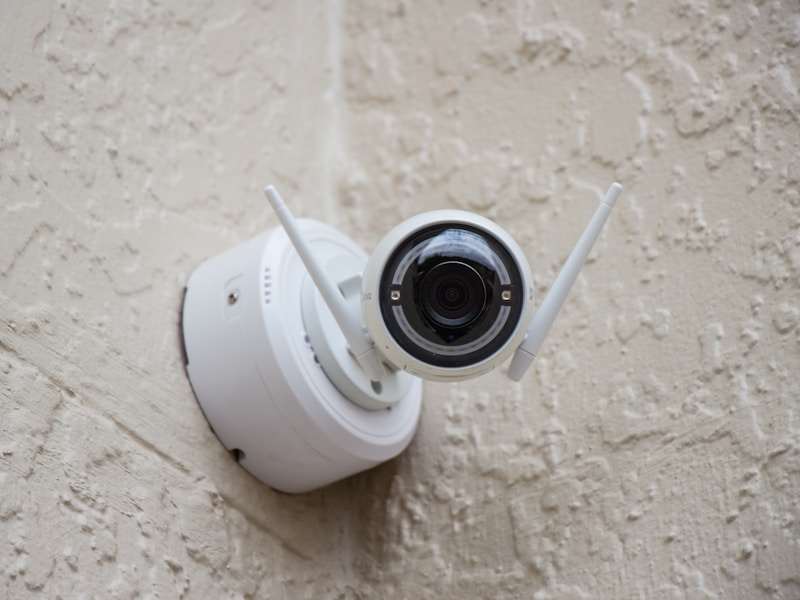
- Smart Home Security: Locally-processed security cameras use on-chip facial recognition to identify family members and pets, preventing private indoor video feeds from ever reaching the internet.
- Industrial IoT: Proprietary manufacturing processes utilize Edge AI on the factory floor to detect machinery anomalies, safeguarding trade secrets from cloud-based industrial espionage.
Key Challenges and the Road Ahead
While Edge AI offers an unparalleled privacy shield, it is not without challenges. Local devices have limited computational power, memory, and thermal thresholds compared to hyperscale data centers. Optimizing models for resource-constrained hardware remains a continuous battle. Additionally, securing the physical edge devices themselves against tampering is crucial, as unauthorized access to local hardware could compromise the integrity of the deployed models.
Implementing Edge AI: Actionable Best Practices
If your organization is transitioning to Edge AI, consider the following implementation strategies:
- Adopt a Hardware-Software Co-design: Select silicon targets (such as microcontrollers with hardware acceleration) alongside optimized frameworks like TensorFlow Lite or ONNX Runtime.
- Enforce On-Chip Security: Utilize secure enclaves, trusted execution environments (TEEs), and hardware-based root of trust to protect local models from extraction or tampering.
- Minimize Data Retention: Ensure that once local inference is complete, the raw input data is immediately purged from the device’s volatile memory.
Conclusion
The rise of Edge AI marks a monumental step forward for digital privacy. By decentralizing intelligence, we move away from a surveillance-prone cloud model toward a secure, resilient, and privacy-first digital landscape. As on-device processing power continues to scale, Edge AI will cease to be an alternative architecture—it will become the default standard for any technology interacting with human lives.