Introduction: The Unending Evolution of Wireless Communication
We are currently living in the golden age of 5G. With its promise of ultra-low latency, massive device connectivity, and multi-gigabit speeds, 5G has laid the groundwork for smart cities, autonomous vehicles, and industrial automation. However, history teaches us that telecommunications infrastructure is never static. Even as operators continue to roll out standalone 5G networks, the global scientific and engineering communities are already deep into the research and standardization phases of 6G (Sixth-Generation) wireless technology.
Scheduled for commercial deployment around 2030, 6G is not merely an incremental speed upgrade. It represents a paradigm shift from traditional communication to integrated sensing, computation, and intelligence. While 5G connected the digital world to physical machines, 6G aims to seamlessly blend our physical, digital, and biological realities. This comprehensive analysis maps the key milestones from 5G to 6G, the intermediate evolution of 5G-Advanced, the architectural breakthroughs required, and what this transition means for the future of global connectivity.
The Baseline: Where 5G Stands and Its Unfinished Promises
To understand the leap to 6G, we must first assess the current state of 5G. The deployment of 5G was built on three core pillars defined by the International Telecommunication Union (ITU):
- Enhanced Mobile Broadband (eMBB): Delivering peak data rates of up to 20 Gbps to support high-definition video streaming, virtual reality, and cloud computing.
- Ultra-Reliable Low-Latency Communications (URLLC): Minimizing latency to under 1 millisecond for mission-critical applications like remote surgery and autonomous driving.
- Massive Machine-Type Communications (mMTC): Supporting up to one million connected IoT devices per square kilometer.
While eMBB has been widely realized in urban centers through Sub-6GHz and Millimeter Wave (mmWave) spectrums, URLLC and mMTC are still evolving. Many commercial 5G networks are still “Non-Standalone” (NSA), meaning they rely on legacy 4G LTE core networks. The true potential of 5G is only now being unlocked with the transition to “Standalone” (SA) 5G, which introduces a cloud-native core, network slicing, and edge computing capability.
“The transition from 5G to 6G is not a sudden replacement, but a continuous evolution. 5G-Advanced will serve as the crucial bridge connecting these two technological eras.”
The Bridge: 5G-Advanced (3GPP Release 18 and 19)
Before the industry transitions to 6G, it will pass through an intermediate phase known as 5G-Advanced, standardized by the 3rd Generation Partnership Project (3GPP) in Releases 18 and 19. 5G-Advanced introduces artificial intelligence (AI) and machine learning (ML) directly into the Radio Access Network (RAN) and core architecture to optimize energy efficiency, beamforming, and network management.
Key advancements in this bridging phase include:
- Smarter IoT Ecosystems: Introducing “RedCap” (Reduced Capability) and passive IoT devices that require minimal power, enabling wider deployment in logistics, agriculture, and smart home ecosystems.
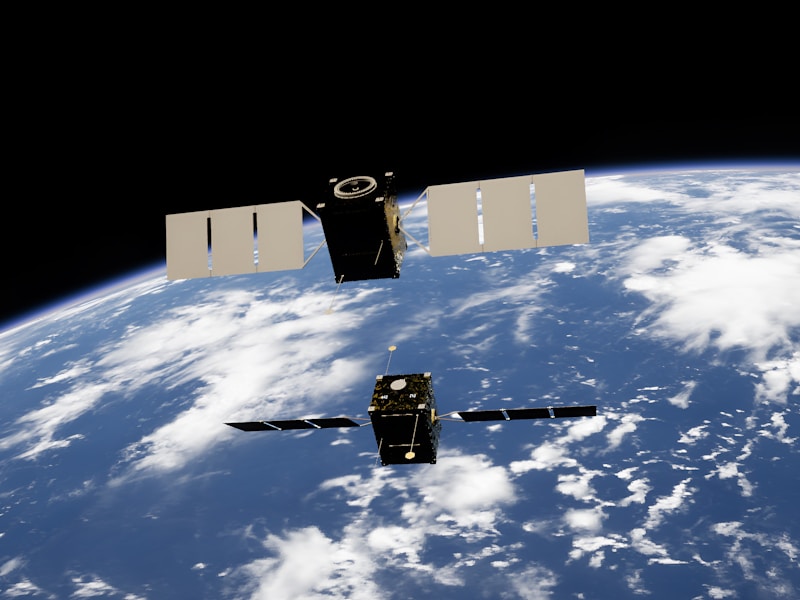
- Integrated Non-Terrestrial Networks (NTN): Standardizing communication between terrestrial towers and Low Earth Orbit (LEO) satellites to provide seamless coverage in oceans, deserts, and remote airspace.
- High-Precision Positioning: Improving localization accuracy to the centimeter level, which is critical for indoor warehouse automation and automated drone corridors.
Defining 6G: Architectures, Spectrum, and Key Capabilities
6G is projected to offer speeds up to 100 times faster than 5G, with peak data rates reaching 1 Terabit per second (Tbps) and user-experienced data rates of 1 Gbps everywhere. Latency will drop to the microsecond level (less than 0.1 milliseconds), virtually eliminating delay. How will this be achieved? It requires venturing into untapped electromagnetic spectrums and developing entirely new physical-layer technologies.
The Terahertz (THz) Frontier
While 5G expanded into the mmWave spectrum (24 GHz to 100 GHz), 6G will push boundaries into the Sub-Terahertz and Terahertz (THz) frequency bands (100 GHz to 3 THz). These extremely high frequencies offer massive, unused bandwidth capable of carrying immense volumes of data. However, THz waves suffer from severe propagation loss and atmospheric absorption. Overcoming this requires advanced beamforming and Reconfigurable Intelligent Surfaces (RIS)—smart mirrors embedded in building facades that reflect, refract, and focus signals around obstacles.
Joint Communication and Sensing (JCAS)
Perhaps the most revolutionary aspect of 6G is its ability to use wireless signals not just to transmit data, but to sense the physical environment. By analyzing how THz waves bounce off objects, the network acts as a radar system. It can detect the shape, distance, velocity, and composition of objects in real-time. This enables “cognitive” networks that can see in the dark, assist autonomous vehicles, and map indoor spaces without relying on cameras, preserving user privacy.
AI-Native Air Interface
Unlike 5G, where AI was retrofitted onto existing protocols, 6G will be AI-native. The air interface—the radio link between the device and the base station—will be designed by AI, dynamically adapting its modulation, coding, and beamforming patterns to match real-time environmental conditions. This drastically reduces signaling overhead and optimizes spectrum efficiency.
The Timeline: Key Milestones on the Road to 2030
The journey to 6G is governed by a highly structured global standardization timeline. Understanding these milestones helps enterprises plan their infrastructure investments:

- 2020 – 2023 (Exploratory Phase): Early academic and industrial research. Vision papers published by ITU-R, detailing the framework for IMT-2030 (the official name for 6G).
- 2024 – 2026 (Pre-Standardization & 5G-Advanced): Commercialization of 5G-Advanced (Release 18/19). Testing of sub-THz silicon chips, advanced antenna arrays, and early RIS prototypes.
- 2027 – 2028 (Standardization Begins): 3GPP starts working on Release 21, defining the official physical and network layer specifications for 6G.
- 2029 (Trials and Interoperability Testing): First pre-commercial 6G trials conducted by major carriers and equipment vendors.
- 2030 and Beyond (Commercial Launch): Phase 1 deployment of 6G networks targeting high-density urban areas and enterprise use cases.
What 6G Means for Global Connectivity and Society
The societal impact of 6G will extend far beyond faster smartphones. It will rewrite the rules of global connectivity, bridging the digital divide and enabling futuristic applications:
1. Ubiquitous 3D Coverage
By fully integrating terrestrial cellular networks with satellite mega-constellations (NTN) and High-Altitude Platform Stations (HAPS) like drones and balloons, 6G will deliver truly global coverage. This means high-speed internet will be available in the middle of the Pacific Ocean, over the Himalayas, and in the most economically marginalized rural areas, democratizing access to education, healthcare, and financial services.
2. Holographic Communications and the Internet of Senses
With Tbps speeds and microsecond latency, 6G will move us beyond flat-screen video calls to real-time, high-fidelity holographic projection. Furthermore, the “Internet of Senses” will become reality, allowing users to transmit touch, smell, and taste sensations across distances via haptic suits and neural interfaces, transforming remote work and virtual collaboration.
3. The Dawn of Digital Twins
6G will enable the creation of highly detailed, real-time digital twins of entire factories, cities, and even human bodies. Continuous streaming of sensor data combined with edge AI processing will allow researchers to simulate scenarios, predict system failures, and optimize traffic or energy grids in real-time before implementing physical changes.
Challenges and Roadblocks to Overcome
The path to 6G is not without significant scientific and logistical hurdles. Addressing these challenges is paramount for successful implementation:
- Energy Consumption: Processing Terahertz signals and running continuous AI models demands massive computational power. If not designed carefully, 6G networks could significantly increase the carbon footprint of the ICT sector. Green communications and ultra-low-power silicon design are critical.
- Hardware Limitations: Current semiconductor technologies struggle to generate sufficient output power at THz frequencies. Developing new semiconductor materials, such as Indium Phosphide (InP) or Gallium Nitride (GaN), is essential to build efficient THz transmitters.
- Geopolitical Fragmentation: Previous cellular generations benefited from global standards. Amid current geopolitical tensions, there is a risk of standard fragmentation, leading to competing “Eastern” and “Western” 6G ecosystems, which would hinder global roaming and drive up costs.
Conclusion: Preparing for the 6G Era Today
The migration from 5G to 6G is a continuous journey that requires long-term planning. While the commercial reality of 6G is still a decade away, the foundational technologies are being built right now. Enterprises should focus on maximizing their current 5G investments, adopting cloud-native architectures, and closely monitoring 5G-Advanced developments. By building a robust, AI-ready, and edge-computing-capable infrastructure today, organizations will be uniquely positioned to harness the limitless possibilities of global 6G connectivity tomorrow.