Introduction: The Illusion of the Prodigy
Walk onto any youth sports field today, and you will witness an environment that closely mirrors professional athletics. Seven-year-olds are playing in year-round travel leagues; nine-year-olds are working with private movement coaches; and pre-teens are being scouted for elite academy programs. The prevailing cultural narrative tells parents that if their child does not specialize in a single sport by early elementary school, they will fall behind, miss out on collegiate scholarships, and throw away their athletic potential.
But what if this hyper-focused approach is doing the exact opposite? What if early sports specialization (ESS) is actually ruining kids’ athletic potential, breaking their bodies, and extinguishing their passion for sports before they even reach high school? To understand the true impact of this youth sports revolution, we must look beyond the promises of elite club coaches and examine the hard truths of pediatric sports medicine, developmental psychology, and long-term athletic development (LTAD) models.
The Origin of the Trend: The Misapplication of Sports Science
The push for early specialization gained massive traction in the early 2000s, largely driven by a misunderstanding of academic concepts like Anders Ericsson’s “deliberate practice” theory, which was popularized by Malcolm Gladwell as the “10,000-Hour Rule.” The theory suggested that achieving elite mastery in any complex task requires roughly 10,000 hours of highly structured, specific practice.
Well-meaning parents and aggressive youth coaches did the math: to hit 10,000 hours by age 18, a child must start intense, year-round training in a single sport by age seven or eight. However, sports science researchers have repeatedly demonstrated that this rule does not apply cleanly to athletic development. Unlike closed-loop activities like playing the violin or chess, team sports are dynamic, chaotic, and highly dependent on open-loop motor skills, spatial awareness, and varied physical capabilities. Applying a rigid, single-sport regimen to young, developing bodies misinterprets how athletic excellence is actually constructed.
The Physical Consequences: Overuse Injuries and Kinetic Imbalances
One of the most alarming consequences of early sports specialization is the exponential rise in pediatric overuse injuries. Historically, sports medicine clinics treated acute injuries like sprains, fractures, and bruises. Today, pediatric orthopedic surgeons are routine performing Tommy John surgery on 13-year-old baseball pitchers and reconstructing ACLs in middle school soccer players.
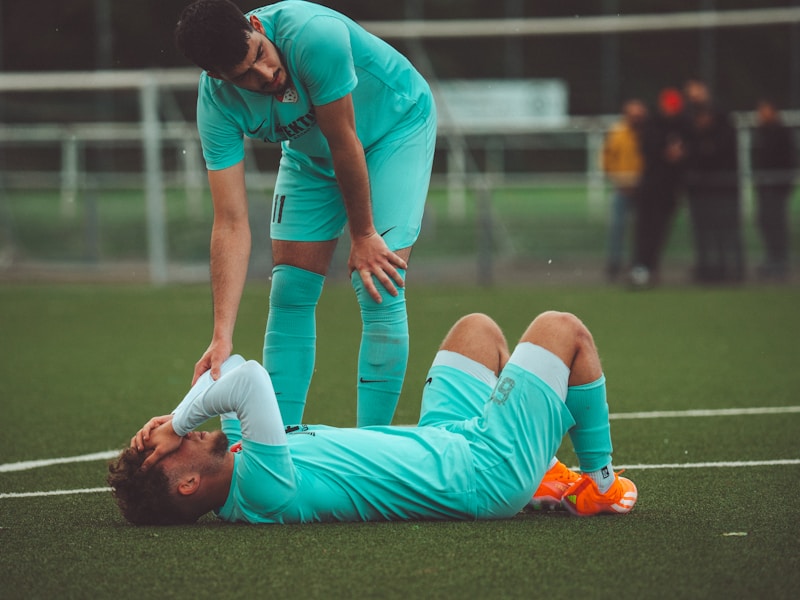
When a child plays only one sport year-round, they perform the exact same repetitive motor patterns millions of times. Their young, growing skeletons are subjected to localized, highly repetitive stresses before their growth plates have even closed.
- Growth Plate Injuries: Young athletes possess active growth plates (epiphyseal plates) which are highly vulnerable to repetitive shear forces. Conditions like Osgood-Schlatter disease (knee pain) and Sever’s disease (heel pain) are classic signs of chronic overload.
- Kinetic Imbalances: A child who only plays tennis or baseball develops asymmetric muscular strength and joint mobility. Without the counterbalancing movements of other sports, these imbalances worsen, setting the stage for major biomechanical failures down the line.
- Lack of Motor Diversification: A young body needs a broad “movement vocabulary.” Children who do not learn to jump, land, cut, roll, and balance in various athletic contexts are far more injury-prone when faced with unpredictable, high-speed athletic situations.
The Psychological Cost: Burnout, Stress, and Identity Foreclosure
The physical toll of early specialization is only half the battle; the psychological impact is equally devastating. When a young child’s life is entirely structured around a single sport, their self-worth often becomes dangerously intertwined with their athletic performance.
Sports psychologists refer to this as athletic identity foreclosure. When a child is labeled solely as “the soccer player” or “the gymnast,” they fail to explore other dimensions of their personality. If they perform poorly, get injured, or decide they want to quit, they face an identity crisis that can lead to severe anxiety, depression, and loss of self-esteem.
“By the time many specialized young athletes reach age 14 or 15—the age when collegiate and elite-level scouts actually start paying attention—they are physically exhausted, emotionally drained, and ready to walk away from sports entirely.”
Furthermore, the loss of intrinsic motivation is a primary driver of youth sports dropouts. When play is replaced by deliberate, high-stakes practice, and when parent-child relationships become dominated by post-game car-ride post-mortems, the joy of the game is extinguished. The data shows that approximately 70% of children drop out of organized sports by the age of 13, largely due to pressure and burnout.

The Athletic Development Paradox: Why Diversification Breeds Elite Performance
Perhaps the most ironic aspect of early sports specialization is that it frequently sabotages a child’s chances of reaching elite athletic status. While early specialization may yield immediate, short-term success in local youth leagues, it severely limits a child’s ceiling.
In contrast, studies of elite and Olympic-level athletes consistently reveal that the majority of them did not specialize early. Instead, they participated in a wide variety of sports during their childhood—a period known as the sampling phase—and did not specialize until late adolescence (around ages 14 to 16).
The Benefits of Multi-Sport Diversification:
- Enhanced Physical Literacy: Playing different sports builds a rich, adaptable movement library. A basketball player who also plays soccer develops superior footwork; a swimmer who also plays baseball develops exceptional shoulder stability and spatial awareness.
- Cognitive and Tactical Transfer: The spatial awareness, tactical defensive concepts, and strategic thinking learned in one sport (like field hockey or basketball) easily transfer to and enhance performance in another sport (like lacrosse or soccer).
- Cultivation of Athletic Resilience: Multi-sport athletes learn to adapt to different coaching styles, social dynamics, and competitive pressures. This emotional flexibility makes them far more resilient and coachable as they move into high-level athletic environments.
Evidence-Based Guidelines: How to Protect Your Child’s Athletic Future
To combat the youth sports industrial complex, pediatricians, sports scientists, and elite athletic organizations have established clear, actionable guidelines to help parents navigate their child’s athletic journey. These recommendations are designed to maximize long-term athletic potential while safeguarding physical and mental well-being:
- The “Age in Hours” Rule: A simple, highly effective guideline is that a child should not participate in more hours of organized, structured sport per week than their age in years. For example, a 10-year-old should not exceed 10 hours of structured sports training per week across all activities.
- The 8-Month Maximum: Young athletes should not train or compete in a single sport for more than eight months out of the year. The remaining four months should be split between other sports, unstructured play, and dedicated rest.
- Emphasize Unstructured Play: Free play (backyard pickup games, tag, riding bikes) is a critical, yet disappearing, component of athletic development. Unstructured play allows children to experiment with movement patterns, self-regulate rules, and experience pure, pressure-free joy.
- Delay Specialization Until Age 14-15: For the vast majority of sports, specialization should be delayed until late middle school or early high school. Exceptional exceptions exist for highly specialized, early-peak sports like gymnastics, figure skating, and diving, but even these require extreme caution regarding physical load.
Conclusion: Shifting the Paradigm from Professionalization to Play
The system of youth sports is not broken for the children; it is broken because of the adults who run and commercialize it. The drive to turn children into specialized athletic prodigies before they have even reached puberty is a biological and developmental mistake.
If we want to truly maximize our children’s athletic potential—and, more importantly, foster a lifelong love for physical activity, health, and fitness—we must reject the false promises of early specialization. By encouraging diversification, protecting our kids from chronic overuse, and prioritizing the joy of play over the pressure of performance, we don’t just build better athletes; we raise healthier, happier, and more resilient human beings.