
Introduction: The Shift From Reactive Chatbots to Autonomous Co-Pilots
We are standing on the precipice of the most significant paradigm shift in personal computing since the smartphone. For the past few years, our interaction with artificial intelligence has been largely conversational and reactive. We open an app, type a prompt, and receive text, code, or an image. While impressive, this paradigm requires continuous human direction, turn-by-turn prompts, and manual execution of the output.
By 2025, this paradigm will be obsolete. The era of static chatbots is rapidly giving way to the age of Personal AI Agents—autonomous software entities that don’t just chat, but act. Armed with memory, reasoning capability, and access to your digital ecosystem, these agents will shift from passive conversationalists to proactive managers of your daily life.
The Core Architecture: What Makes an AI Agent ‘Autonomous’?
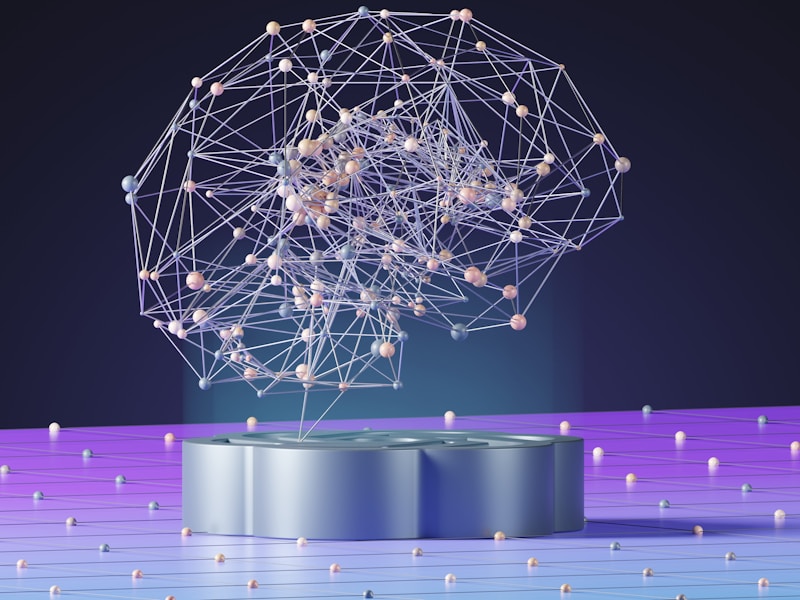
To understand why this shift is so profound, we must look beneath the hood. Chatbots are fundamentally stateless prediction engines. AI agents, however, are built on a framework that integrates several advanced cognitive layers:
- Long-Term Memory: Unlike a standard chat window that forgets everything the moment you close it, personal agents utilize Vector Databases and Retrieval-Augmented Generation (RAG) to maintain a continuous, evolving history of your preferences, relationships, and history.
- Planning & Goal Deconstruction: Advanced reasoning models allow agents to take a high-level prompt (e.g., ‘Organize a birthday dinner for my sister this Thursday’) and break it down into an sequential chain of sub-tasks.
- Tool Integration: Through Large Action Models (LAMs) and API connectors, agents can interact with external systems—booking flights, managing smart devices, drafting emails, and authorizing micro-payments.
- Reflective Learning: Agents can evaluate their own performance. If an attempt to book a reservation fails, the agent self-corrects and tries an alternative path without requiring user intervention.
‘The future of AI is not about who can write the best prompt, but who can deploy the most effective agent.’
A Day in the Life: How Agentic AI Manages 2025
To conceptualize how deeply integrated these agents will become, let us explore a typical daily routine powered by personal AI coordination.
07:00 AM – Proactive Optimization
Your agent, running locally on your smart device, analyzes your sleep pattern data alongside your morning schedule. It notices that your first meeting is at 9:00 AM, but traffic along your usual route is heavily congested due to roadwork. Instead of letting you sleep, the agent quietly recalculates. It shifts your smart alarm to wake you 15 minutes early, adjusts your smart thermostat to prep the house, and pre-orders your favorite espresso from the cafe down the street, timing it to be ready exactly as your car arrives.
12:00 PM – Interoperable Task Management
During a busy workday, you receive an urgent message from a family member asking if you can attend a weekend gathering. Instead of toggling between your calendar, map app, and email, you simply say to your agent: ‘Sort out the weekend trip.’ The agent checks your calendar, cross-references flight prices, automatically coordinates with your partner’s AI agent to ensure mutual availability, and drafts an itinerary. It presents you with a single confirmation button to approve the transaction.
06:00 PM – Seamless Health and Nutrition Integration
Upon returning home, your smart fridge coordinates with your health wearables and your agent. Knowing you had a high-intensity workout today and need specific macronutrients, your agent pulls up a personalized recipe based on ingredients currently in your pantry. It also identifies that you are out of olive oil and fresh garlic, automatically adding them to your weekly grocery delivery dispatch scheduled for the next morning.
The Technological Enablers: Local LLMs and Edge AI
Two major technological advancements are accelerating the deployment of these agents by 2025. First is the optimization of Local Large Language Models (LLMs). Processing entire conversations in the cloud is expensive, slow, and introduces latency. Next-generation system-on-chips (SoCs) inside smartphones and laptops now feature highly powerful neural processing units (NPUs). This allows your agent to run locally on your device, ensuring millisecond response times and offline capability.
Second is the evolution of Large Action Models (LAMs). While LLMs excel at understanding and generating language, LAMs are trained to understand the structure of user interfaces. A LAM can ‘see’ and interact with websites and applications just like a human would, navigating menus, filling out forms, and executing transactions across platforms that don’t even have public APIs.

The Imperative of Privacy and Digital Sovereignty
The delegation of your life to an AI agent requires an unprecedented level of trust. Your agent must know your financial details, medical records, personal preferences, and real-time location. This raises massive security concerns. By 2025, the industry will pivot heavily toward local-first architecture and personal data vaults. Your data will not be harvested to train global models; instead, it will sit in an encrypted personal sandbox, accessible only to your localized agent. Authorization frameworks will emerge, allowing users to define strict boundaries on what actions an agent can perform autonomously versus what requires explicit biometric verification (such as purchases over a specific dollar threshold).
How to Prepare Your Digital Life for the Agentic Era
You do not need to wait until 2025 to start preparing for this paradigm shift. You can begin structuring your digital environment today to integrate seamlessly with future agents:
- Consolidate Your Data Silos: Agents thrive on structured context. Transitioning your scheduling, task tracking, and note-taking into interoperable tools with clean APIs (like Notion, Obsidian, or Google Workspace) will make it easier for future agents to index your life.
- Adopt Modular Security Practices: Use password managers and enable granular API token systems. When agents require access to your accounts, they will use secure API bridges rather than your master password.
- Develop ‘Intent Delegation’ Skills: Practice communicating in outcomes rather than instructions. Instead of telling a system step-by-step how to do something, practice writing prompts that define the desired end state, constraints, and success criteria.
Conclusion: The Dawn of the Action Engine
The transition from chatbots to personal AI agents represents the ultimate democratic tool for time management. By automating cognitive administrative overhead—the endless scheduling loops, transaction logistics, and data organization that drain our daily energy—we unlock a massive surplus of human attention. In 2025, you won’t just use AI to write emails; you will deploy AI to curate your lifestyle, leaving you free to focus on deep work, creative expression, and authentic human connection.