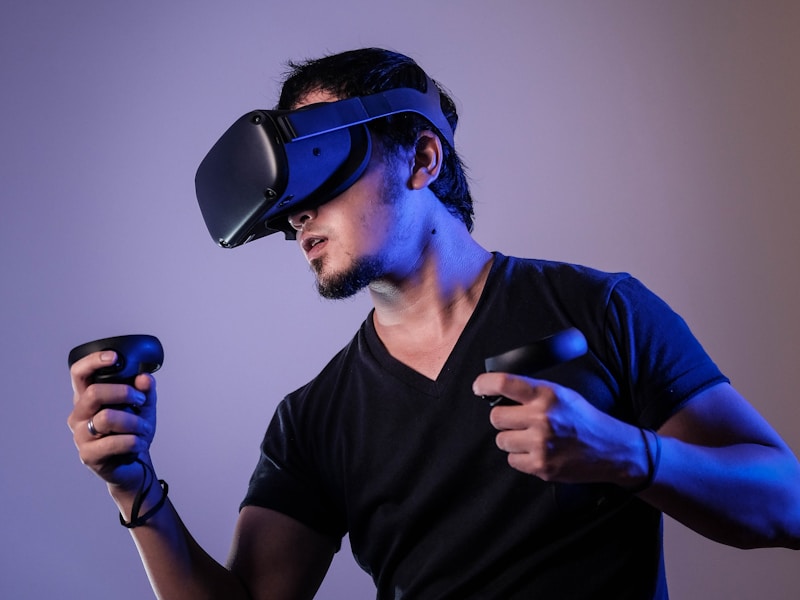
Introduction: The Death of the Flat Screen
For over two decades, competitive gaming has relied on a spectator model inherited directly from traditional television. Fans watch 2D broadcasts on platforms like Twitch and YouTube, viewing the action through a director’s lens. While this approach has fueled esports’ explosive global growth, it inherently limits the spectator’s agency, confining complex, multi-dimensional virtual battles to a flat, pixelated canvas. But a silent revolution is underway.
As Virtual Reality (VR) and Augmented Reality (AR) transition from niche novelties into high-performance consumer technologies, they are dismantling the traditional broadcasting paradigm. We are entering the era of the immersive spectator, where fans no longer just watch a game; they step inside it. From sitting courtside in virtual coliseums to projecting 3D war rooms directly onto their living room coffee tables, immersive technologies are redefining how human beings interact with digital competition.
Virtual Reality: Stepping Onto the Virtual Rift
Virtual Reality offers something traditional media never could: absolute spatial presence. By replacing the flat monitor with a 360-degree, stereoscopic viewport, VR allows spectators to experience esports at a human scale. This transformation is manifesting in two major ways.
1. The Virtual Courtside Experience
In traditional sports, courtside seats at the NBA Finals cost thousands of dollars. VR democratizes this premium tier of spectatorship. Through dedicated virtual arenas, developers and tournament organizers can host thousands of fans in a shared, highly interactive virtual stadium. Spectators can customize their avatars, sit alongside friends from across the globe, and view the main broadcast on a colossal virtual screen that dwarfs any physical IMAX theater.
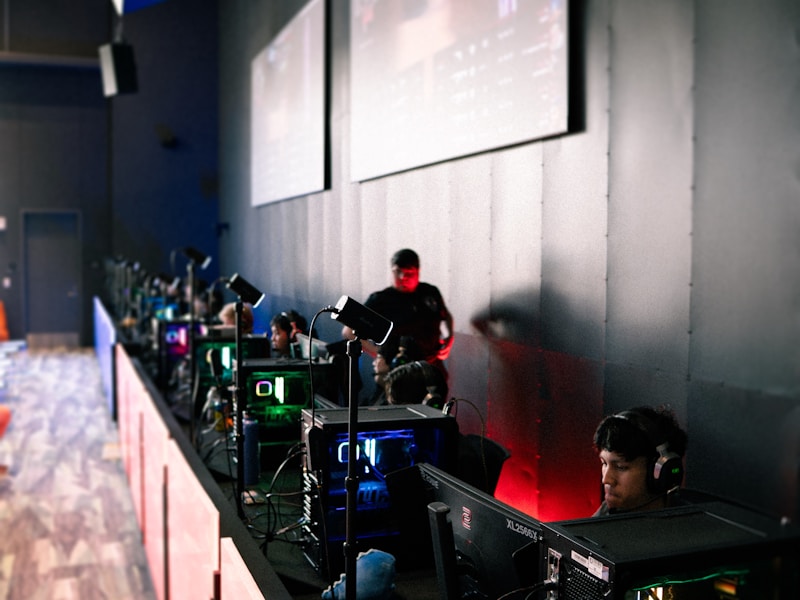
More importantly, VR allows spectators to look down from the screen and see the actual players on their stage setups, mimicking the real-world physical event experience from the comfort of their homes. This sense of shared presence—cheering alongside thousands of virtual avatars—bridges the emotional gap of remote viewing.
2. In-Game Spatial Spectating
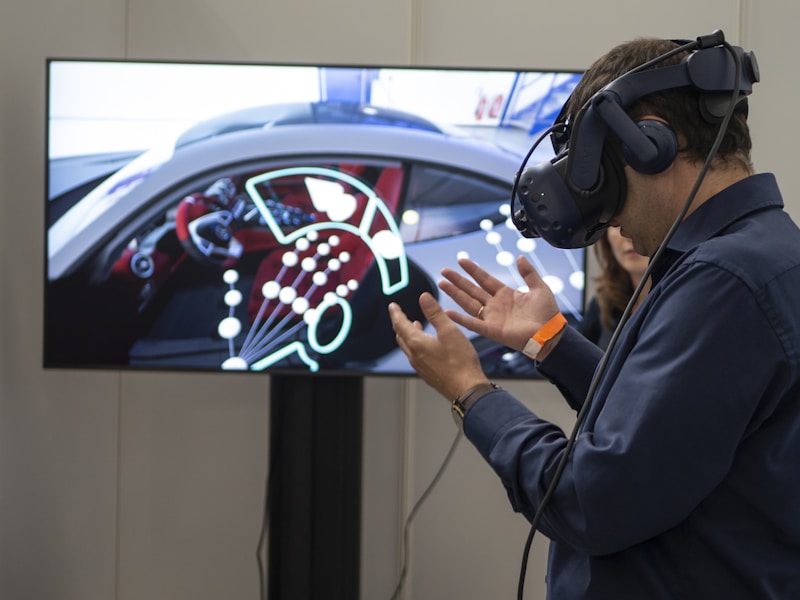
Why watch a pre-recorded camera feed when you can stand on the battlefield itself? In games like Counter-Strike or Dota 2, VR spectator modes allow viewers to scale the map to giant proportions or shrink down to stand alongside the character models. Imagine standing on the ‘A Site’ of Dust II as a flashbang goes off, or floating like an omniscient deity over the Baron pit in League of Legends as a team fight erupts. Spectators gain complete control over their camera angles, enabling an unprecedented level of tactical analysis and personal storytelling.
Augmented Reality: The Battleground in Your Living Room
While VR completely isolates the user in a virtual world, Augmented Reality overlays digital components onto our physical reality. This makes AR highly accessible, requiring only a smartphone, tablet, or next-gen AR glasses (such as the Apple Vision Pro or Meta Quest 3) to transform the domestic environment into an interactive control center.
1. Holographic Tabletop Maps
One of the most compelling applications of AR in esports is the tabletop tactical map. Instead of squinting at a tiny 2D minimap in the corner of a broadcast, viewers can project a fully rendered 3D hologram of the entire game map onto their physical tables. As players move, engage in firefights, or secure objectives in real-time, their holographic counterparts mirror these actions instantly. This provides a macro-level tactical understanding of the match that was previously impossible to capture in a single camera shot.
2. Dynamic HUD Overlays and Live Statistics
Traditional broadcasts are often cluttered with user interfaces, health bars, and item counters that obscure the action. AR elegantly solves this by offloading the head-up display (HUD) from the main stream. By wearing AR glasses or using a secondary companion screen, spectators can view floating, interactive dashboards around their television. You can track player loadouts, real-time gold graphs, and player heart rates in your physical peripheral vision, leaving the primary screen completely clean and cinematic.
The Technical Backbone: How It Works
Delivering these seamless immersive experiences requires a sophisticated, highly integrated tech stack. Unlike traditional video feeds, VR and AR spectator modes must process and transmit raw game data in real-time.
- Real-Time Game Telemetry: Tournament servers must export raw spatial data (player coordinates, health points, spell cooldowns) directly to an external API. This data is then rendered locally on the viewer’s device inside a matching game engine (such as Unity or Unreal Engine), ensuring absolute synchronization with zero video latency.
- Spatial Audio Processing: To truly feel present, audio must change based on the viewer’s head movements. Advanced spatial audio algorithms calculate the exact vector from the viewer’s virtual position to the source of an in-game explosion or caster’s voice, delivering pinpoint directional sound.
- Cloud Rendering and 5G: Rendering high-fidelity 3D assets locally on mobile AR glasses can be taxing. The rollout of high-speed 5G networks and edge cloud computing allows heavy rendering to occur on remote servers, streaming low-latency, fully rendered stereoscopic frames directly to the user’s headset.
"The future of spectator sports isn’t just about watching the players; it’s about occupying the same digital space as them."
Real-World Case Studies
We are already seeing pioneering implementations of these technologies across major esports ecosystems:
- Riot Games and League of Legends: Riot has consistently pushed the envelope with AR. During the Worlds 2017 opening ceremony, they projected a giant, photo-realistic Elder Dragon into the physical Beijing National Stadium. More recently, they have integrated AR constructs directly into their live analyst desks, allowing hosts to physically interact with 3D player models and match statistics.
- Valve’s Dota 2 VR Hub: Valve was an early pioneer, launching a comprehensive VR spectator mode that allowed users to stand around a giant, interactive 3D map of the game world while watching the main broadcast stream on a massive virtual wall.
- ESL’s Immersive Initiatives: Tournament organizer ESL has experimented with 360-degree camera arrays placed directly between pro players on stage, allowing home viewers with VR headsets to feel the intense physical pressure of the main stage.
Key Obstacles to Mass Adoption
Despite the immense promise, several hurdles prevent VR and AR from becoming the default esports spectating mediums today:
- Hardware Fragmentation and Cost: High-end VR headsets and AR glasses remain significant financial investments. Until lightweight, comfortable, and affordable headsets reach mass-market penetration, immersive spectating will remain a premium option.
- Motion Sickness (Vestibular Mismatch): Rapid camera movements in virtual spaces can cause nausea. Developers must design intuitive, comfort-focused locomotion systems (such as teleportation or stationary bird’s-eye viewports) to make spectating comfortable for long periods.
- Bandwidth Constraints: Streaming high-fidelity, real-time spatial data alongside synchronized video and audio requires substantial network bandwidth, which is not yet universally accessible in all regions.
Conclusion: The Omnipresent Spectator
The transformation of the esports spectator experience from passive viewing to active spatial presence is not just inevitable—it is already unfolding. As VR and AR hardware becomes lighter, cheaper, and more powerful, the boundaries between the physical world, the spectator, and the virtual arena will dissolve entirely. In this next-gen arena, the fan is no longer a distant observer sitting on a couch. They are an omnipresent entity, floating over the battlefield, analyzing complex tactics in three dimensions, and celebrating victories shoulder-to-shoulder with thousands of fans globally. The flat screen is dead; the virtual coliseum is open.