The Paradigm Shift in Tinseltown: Enter Artificial Intelligence
Hollywood has always been an industry built on a delicate balance of artistic vision and calculated risk. For over a century, filmmaking has relied on manual processes, massive labor pools, and human intuition to turn abstract ideas into box-office sensations. However, we are currently witnessing the dawn of a new era. Artificial Intelligence (AI) is no longer a futuristic concept confined to the plots of sci-fi blockbusters; it is actively reshaping how movies are written, produced, edited, and distributed.
From generative AI tools that assist screenwriters to sophisticated deep-learning models capable of aging or de-aging actors seamlessly, AI is democratizing creative production and optimizing costly logistics. Yet, this rapid technological integration is not without friction. It has ignited fierce debates over intellectual property, creative ownership, and the future of human labor in the arts. This comprehensive guide explores the multifaceted impact of AI on modern cinema, analyzing how it streamlines production pipelines and redefines the boundaries of human imagination.
1. Pre-Production: Data-Driven Screenwriting and Intelligent Casting
Before a single camera rolls, AI is already exerting its influence in the writer’s room and executive suites. Pre-production is historically characterized by high uncertainty and financial risk. AI is helping studios mitigate these risks through advanced predictive analytics and generative tools.
AI-Assisted Screenwriting and Narrative Analysis
Generative models like GPT-4 and specialized industry tools are being used by development teams to analyze scripts for pacing, emotional beats, and audience engagement. Studios can upload a screenplay to an AI platform to receive instant feedback on narrative structure, genre alignment, and even predictions regarding the film’s potential MPAA rating. While AI is not replacing the unique voice of human screenwriters, it acts as a highly efficient sounding board—generating dialogue options, brainstorming plot twists, and streamlining the outlining process.
Predictive Analytics in Casting and Budgeting
Casting is another area undergoing an AI transformation. Machine learning algorithms can analyze vast datasets of actor performances, social media engagement, international box office draw, and demographic appeal. By synthesizing this data, AI can suggest casting choices designed to maximize global box office revenue while staying within budget constraints. Additionally, AI-driven budgeting software can predict production costs with unprecedented accuracy, taking into account historical shooting data, local tax incentives, weather patterns, and crew requirements.
2. Production: Virtual Production, Camera Automation, and Digital Sets
Once a project greenlights, AI continues to streamline physical production, bridging the gap between physical reality and digital assets.

The Power of Virtual Production and LED Volumes
Popularized by pioneering shows like The Mandalorian, virtual production combines game engines (such as Unreal Engine) with massive LED screens (LED Volumes) to project photorealistic environments in real time. AI plays a critical role here by dynamically rendering background environments that adjust instantly to the camera’s physical movement and lens perspective. This eliminates the need for traditional green screens, allowing actors to interact naturally with their environments and enabling cinematographers to capture perfect in-camera lighting and reflections.
AI-Driven Cinematography and Camera Control
On set, robotic camera systems powered by computer vision algorithms can track actors autonomously, maintaining flawless focus and framing even during complex, high-speed action sequences. These AI-powered camera rigs learn from the directors’ preferences and can replicate highly precise camera paths repeatedly, saving hours of set-up time and reducing the potential for human error.
3. Post-Production: AI Editing, Invisible VFX, and Deepfakes
The post-production suite is arguably where AI has made its most profound, jaw-dropping advancements. Tasks that previously required thousands of hours of painstaking manual labor are now accomplished in a fraction of the time.
Automated Rough Cuts and Visual FX Acceleration
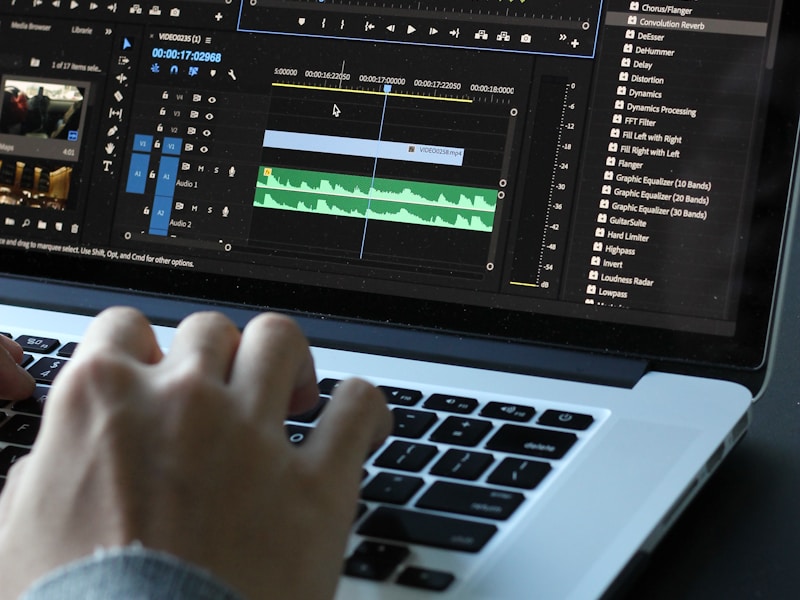
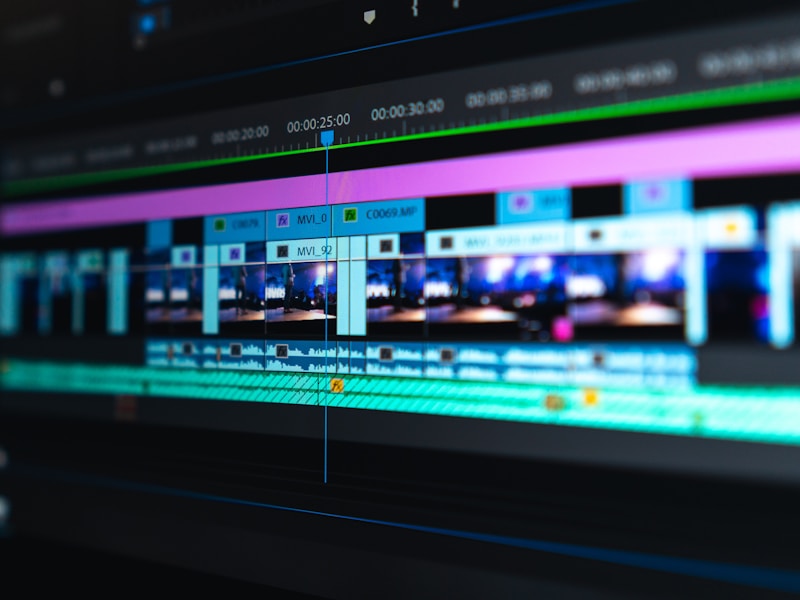
Editing is a deeply creative process, but it is also bogged down by tedious administrative work. AI tools can now automatically ingest hundreds of hours of raw footage, transcribe audio in real time, tag metadata based on facial recognition, and organize clips by scene or character. Furthermore, AI can generate basic rough cuts of scenes by analyzing dialogue and camera angles, allowing editors to focus immediately on the nuance of storytelling and emotional pacing.
In the realm of Visual Effects (VFX), AI is a massive force multiplier. rotoscoping—the painstaking process of isolating a subject from its background frame by frame—can now be done in seconds using AI-powered masking tools. Similarly, deep-learning algorithms can automate the cleanup of wires, rigs, and unwanted background elements, freeing up VFX artists to focus on complex 3D modeling and creative compositing.
De-Aging, Synthetic Actors, and Digital Re-creation
“AI is effectively conquering the linear passage of time in cinema. We can now see an actor play their twenty-year-old self and their eighty-year-old self in the same film, with photorealistic precision that respects their original performance.”
Using deep neural networks trained on historical footage of actors, VFX studios can perform seamless digital de-aging. Unlike older, labor-intensive CGI techniques, AI de-aging maps the young face over the actor’s live performance, retaining their organic micro-expressions. This technology also enables the preservation of legacy performers through digital clones, allowing studios to complete performances when actors are unavailable, or posthumously with the permission of their estates.
4. Audio, Music, and Global Localization
AI’s impact extends far beyond the visual spectrum; it is fundamentally altering sound design, scoring, and how films are adapted for international audiences.
- Automated Sound Design: AI algorithms can analyze visual action on screen and automatically generate matching foley sounds, such as footsteps on gravel or the rustle of clothing, greatly accelerating the sound mixing process.
- Algorithmic Music Generation: While epic orchestral scores still require human composers, AI is increasingly used to generate ambient tracks, temporary scores, and dynamic background music that automatically adapts to the visual pacing of a scene.
- Hyper-Realistic Dubbing and Localization: Historically, foreign-language dubbing suffered from a jarring mismatch between the translated audio and the actors’ lip movements. AI-driven video synthesis can now subtly alter the mouth movements of actors on screen to align perfectly with the dubbed dialogue in French, Spanish, Japanese, or any other language, preserving the cinematic illusion for global audiences.
5. The Ethical and Legal Frontiers: Copyright, Consent, and Labor
As with any technological revolution, the rise of AI in Hollywood has introduced complex ethical and legal questions. These tensions were a primary catalyst for the historic 2023 writers’ and actors’ strikes (WGA and SAG-AFTRA), highlighting the urgent need for clear boundaries around AI usage.
Protecting the Human Element and Intellectual Property
At the heart of the debate is the issue of consent and compensation. If an AI model is trained on an actor’s likeness or a screenwriter’s body of work, how should those creatives be compensated? Industry unions have fought hard to secure contractual protections ensuring that synthetic performances require explicit actor consent and fair pay, and that generative AI cannot be used to write or rewrite original screenplays without proper credit and compensation.
Moreover, copyright laws around the world are struggling to keep up. Current legal precedents in many jurisdictions state that works created solely by AI cannot be copyrighted, meaning studios must maintain a high degree of human authorship to protect their massive intellectual property investments.
The Future: A Collaborative, Hybrid Cinema
The rise of AI in Hollywood is not a zero-sum game of machines replacing humans. Instead, the future of cinema lies in a collaborative, hybrid model where AI serves as the ultimate creative assistant. By automating repetitive tasks, reducing production costs, and offering novel tools for visualization, AI allows filmmakers to take bolder creative risks and bring ambitious, highly imaginative stories to life that were once deemed unfilmable. Ultimately, the heart of cinema will always rely on the human condition—our shared emotions, vulnerabilities, and the desire to tell stories that connect us all. AI is simply the next great brush with which artists will paint the canvas of the silver screen.